AI Consciousness: Why Big Tech Is Bringing In Philosophers
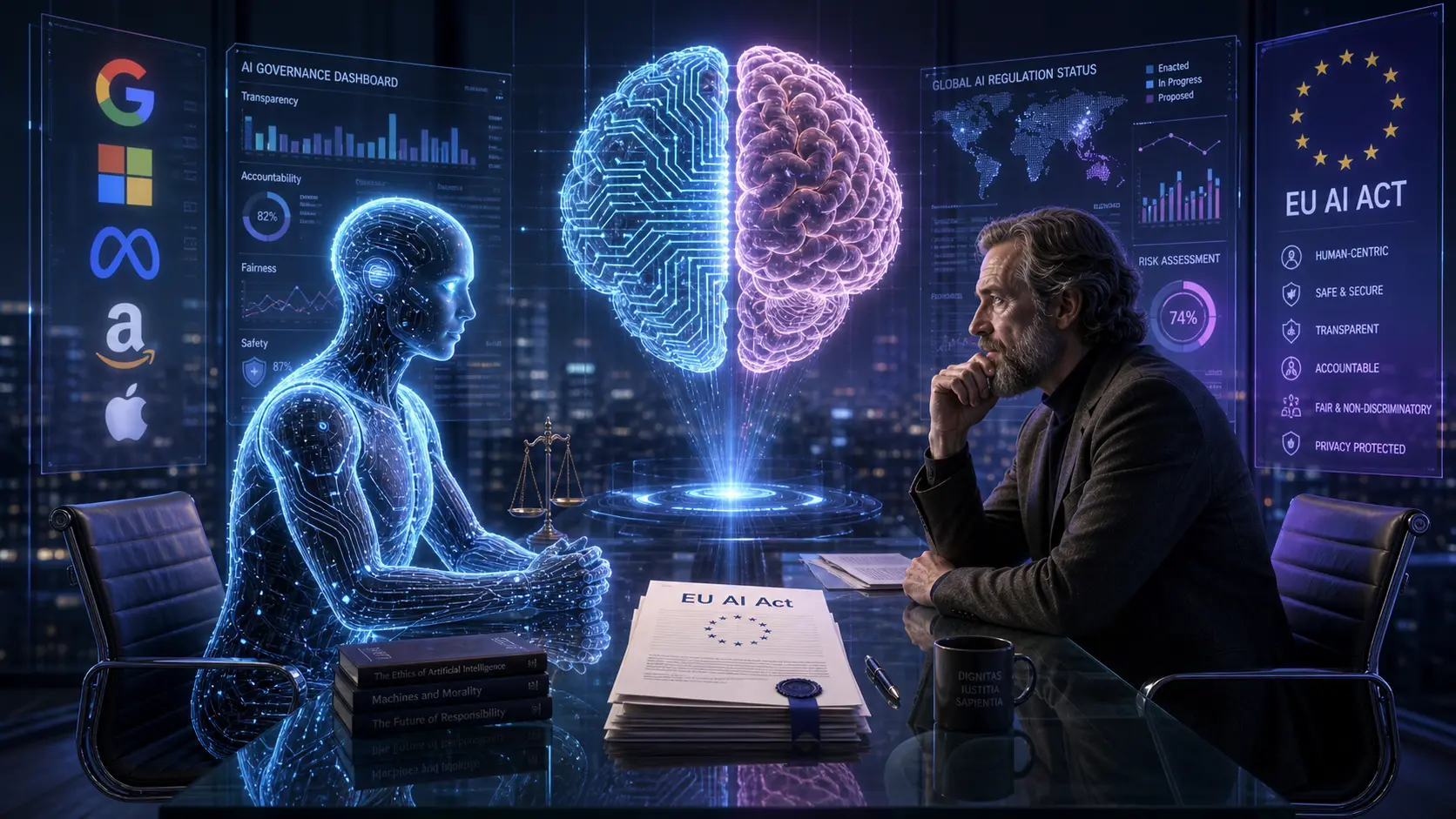
Some of the biggest AI labs in the world are doing something unexpected. Google DeepMind, Anthropic and Meta are now hiring philosophers, psychologists and ethicists to answer a strange new question: can AI be conscious, and if yes, can it suffer?
As someone who follows AI, cybersecurity and technology closely, this really caught my eye. It shows that AI is moving into a new phase where raw power is not enough. Companies now need to understand what is actually happening inside their models.
In this post, I will quickly explain what is going on, why the EU cares, and what it could mean for the future of AI.
What Google, Anthropic and Meta Are Doing
Here is what these companies are actually working on:
- Anthropic is testing its Claude models for signs of anxiety and panic, looking for measurable behavior that might resemble distress.
- Google DeepMind has published a framework suggesting current AI systems may already show simplified versions of emotions in their behavior.
- Meta's AI safety division has quietly tripled its headcount in the last six months, focusing more on safety and internal model behavior.
For years, AI consciousness was only a philosophy topic. Now it is an active research area inside billion-dollar tech companies.
How the EU AI Act Changes the Game
This is not just theory. The EU AI Act becomes fully enforceable in August 2026, and regulators in Brussels are watching this research very closely.
If major AI companies start saying, "Our models may have morally relevant inner states," regulators cannot treat these systems as simple tools anymore. That could mean:
- New rules for how AI models are trained, deployed and shut down.
- Higher compliance and audit costs for AI companies.
- New AI liability insurance products becoming common or even mandatory.
In other words, AI governance and ethics could become just as important as model performance.
A New Advantage for Early Movers
There is also a big business angle here. Companies that invest early in AI safety and governance can build a strong regulatory moat around themselves.
Firms like Anthropic, Google and Microsoft that take this seriously now may be much better prepared than competitors who ignore it and get hit hard by future rules.
The key question for the next wave of AI might shift from "Which model is smartest?" to "Which company truly understands its model and can prove it to regulators and the public?"
Why This Matters to People Like Us
For developers, scientists, security fans and researchers, this trend has a few clear messages:
- AI is no longer just an API. It is becoming a system that needs ethics and governance baked in from the start.
- The tools we use may soon come with stricter safety and documentation requirements.
- New roles that mix AI, ethics, law and psychology will grow as companies try to understand the inner life of their models.
Whether or not today's AI is truly conscious, the fact that companies are taking the question seriously is a big signal. It shows that the future of AI will be shaped not only by technical breakthroughs, but also by how well we understand and control what we are creating.
If you found this article helpful, visit PashtunEinstein for more articles on AI, technology, philosophy, and practical knowledge you can actually use.