Is AI Making Us Less Independent? Why We Must Use Technology Wisely
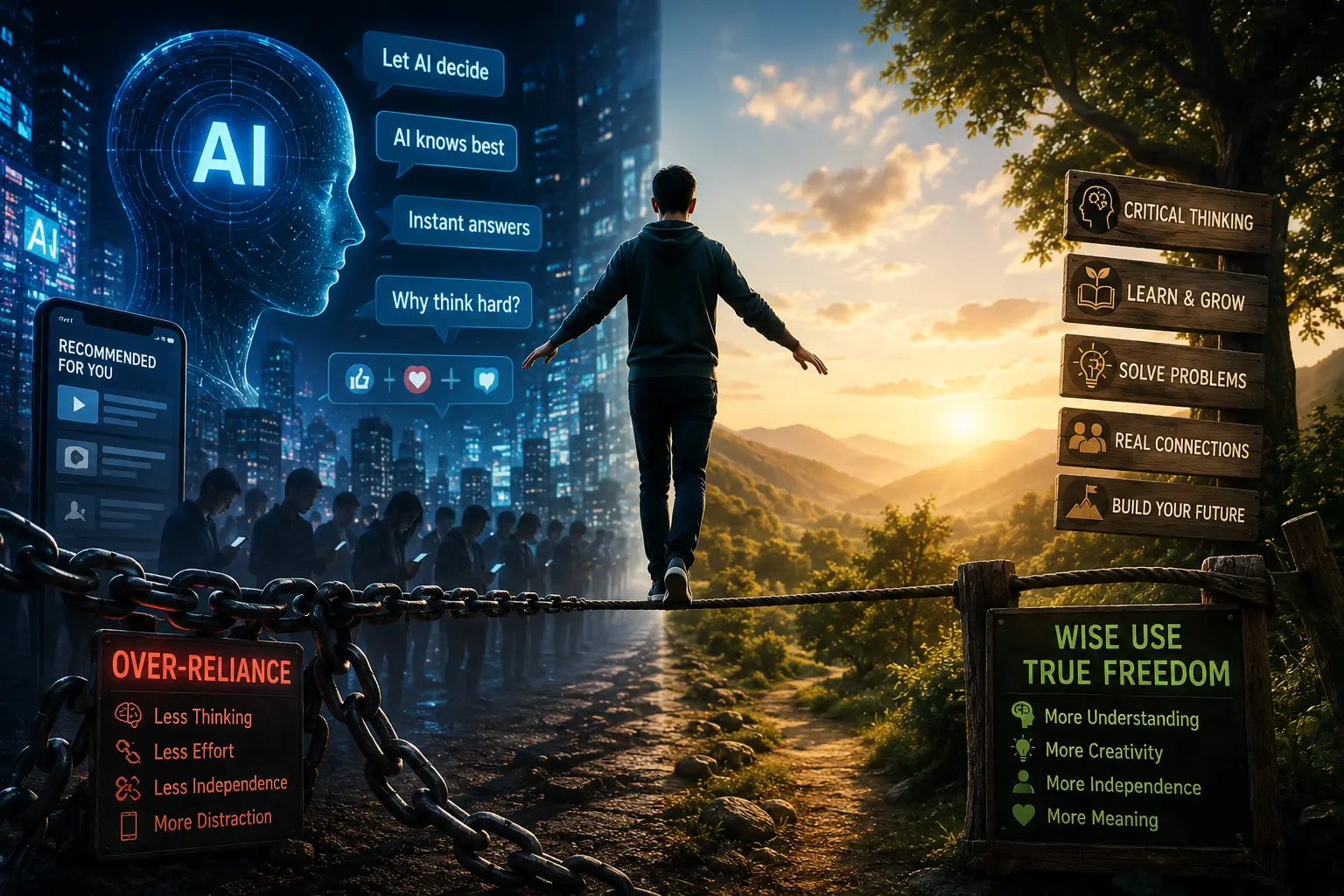
Artificial intelligence is changing how we work, learn, search for information, and make decisions. As someone who enjoys technology, cybersecurity, and open-source tools, I believe AI can be extremely useful. But I also believe we should not become so dependent on it that we stop thinking for ourselves.
When people rely too heavily on technology, they can lose practical skills, independence, and control over their own lives. This is not a hypothetical concern. It is already happening, and most people do not even notice it.
AI Is Useful, But It Is Not Wisdom
AI can help us write emails, solve coding problems, summarize documents, generate ideas, and automate repetitive tasks. For technical people, it can speed up troubleshooting, documentation, research, and learning.
But AI does not have human judgment, real-world experience, values, or responsibility. It can give incorrect answers, miss important context, or confidently present false information. That is why I treat AI as an assistant, not as the final decision-maker.
The best approach is simple: use AI to improve your thinking, not replace it.
I wrote about a similar idea in my post Can AI Replace Humans? My Honest Thoughts on AI, Fear, and the Future. The same principle applies here. AI is a tool. If you learn to use it properly, it makes you more capable. If you let it do your thinking for you, it makes you weaker.
The Risk of Becoming Too Dependent
Technology is convenient because it saves time. GPS helps us navigate, cloud storage keeps our files accessible, and AI can answer questions within seconds. But convenience can slowly turn into dependency.
For example, many people cannot navigate without a phone, remember important contact details, cook basic meals, or solve simple problems without searching online. If the internet, power, phone network, or a specific platform becomes unavailable, they may feel helpless.
This is not about rejecting technology. It is about keeping the skills that allow us to function when technology fails.
Critical Thinking Matters More Than Ever
One of the biggest risks of AI is accepting every answer without checking it. AI-generated content can look professional and convincing even when it contains mistakes.
This is especially important in cybersecurity, finance, health, legal matters, and business decisions. A wrong AI recommendation in these areas can create real problems.
Before trusting an AI answer, I ask myself:
- Does this information come from a reliable source?
- Can I verify it using official documentation or trusted experts?
- Does the answer make logical sense?
- Is there important context missing?
- What could happen if this answer is wrong?
AI can help us find ideas quickly, but humans must still verify, question, and decide.
Protecting Privacy and Freedom
AI systems often depend on collecting large amounts of data. This may include what we search for, write, upload, buy, watch, and discuss online. The more we depend on a few centralized platforms, the more control those platforms can have over our digital lives.
For people who care about privacy and cybersecurity, this is a serious issue. It is wise to understand where your data goes, which AI services store conversations, and how long they retain information.
A few practical steps can help:
- Do not share passwords, API keys, private client data, or confidential documents with public AI tools.
- Review the privacy policy and data retention settings before using an AI platform.
- Use privacy-focused tools when possible.
- Keep local backups of important files and documentation.
- Avoid placing all your work, communication, and data inside one platform.
Digital freedom is not only about privacy. It is also about having choices, backups, skills, and control over your own systems.
This connects to something I explored in AI Consciousness: Why Big Tech Is Bringing In Philosophers. The biggest AI companies are already wrestling with questions about what these systems might do, what they might feel, and how much control we are handing over. It is worth paying attention.
Keep Your Real-World Skills Strong
Technology can fail at any time due to outages, cyberattacks, hardware failure, account lockouts, or simple mistakes. Being prepared does not mean living in fear. It means building confidence and resilience.
Here are useful skills everyone should maintain:
- Basic navigation with a physical map and compass
- First aid and emergency preparedness
- Cooking and food storage basics
- Managing important documents offline
- Strong password and backup practices
- Basic home, vehicle, and computer troubleshooting
- Independent research and fact-checking
- Clear communication without relying on automated tools
Use AI as a Partner, Not a Replacement
AI is not the enemy. The real problem begins when we give up our ability to think, learn, verify, and act independently.
A healthy AI workflow looks like this:
- Ask AI for ideas, explanations, or a starting point.
- Verify important claims using trusted sources.
- Test technical solutions before using them in production.
- Apply your own knowledge, judgment, and experience.
- Keep improving the skills that AI is helping you with.
Final Thoughts
AI will continue to become more powerful and more common in daily life. It can help us learn faster and work more efficiently, but only if we use it responsibly.
The goal should not be to avoid AI completely. Instead, we should use it without losing our independence, privacy, practical skills, and critical thinking.
Technology should make us stronger, not make us unable to function without it. The more we understand the tools we use, the more control we keep over our work, data, and future.