Quantum Computing Explained Simply: How It Could Change Everyday Life
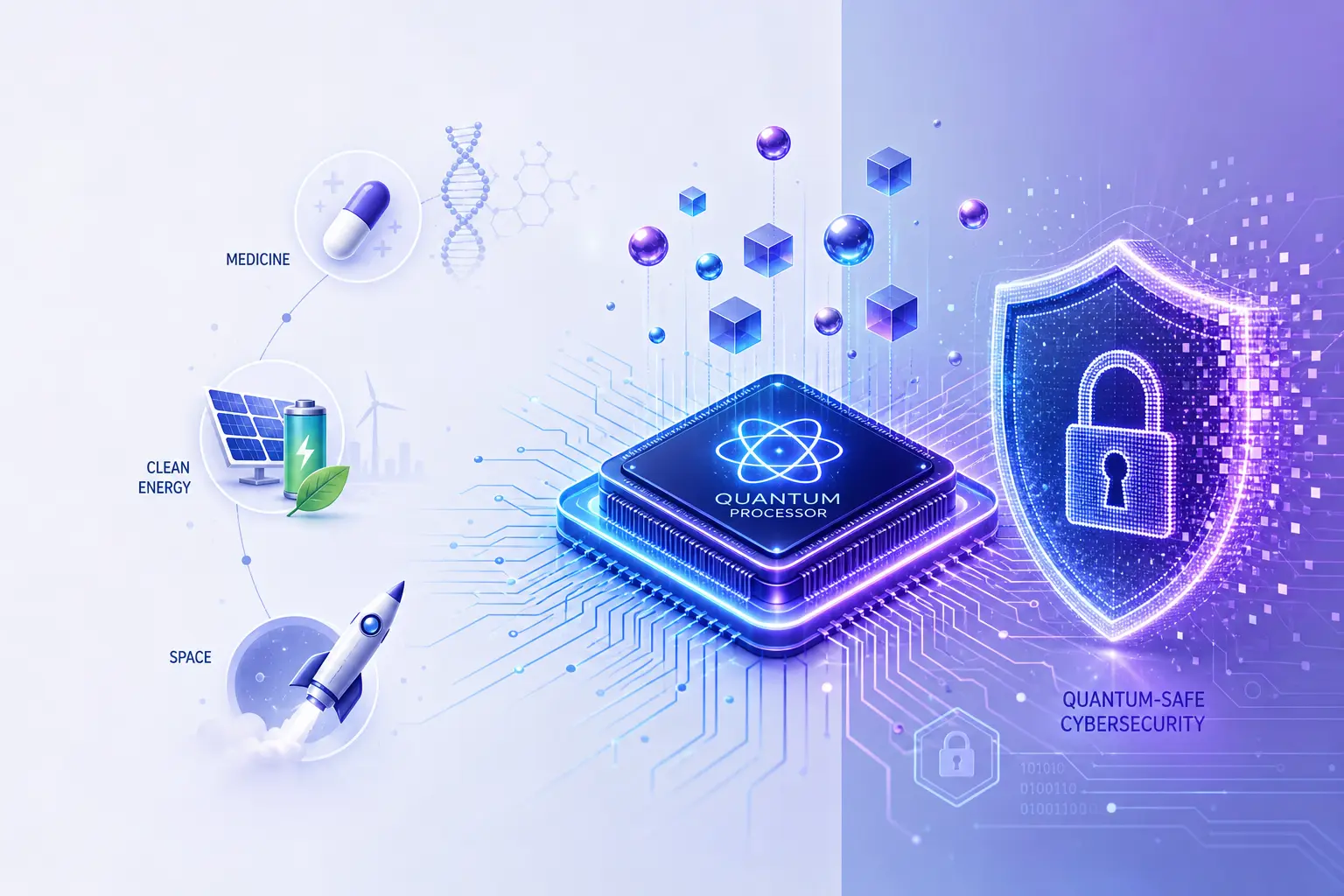
Quantum computing sounds like something from a science fiction movie, but it is a very real technology that could change everyday life in the coming years. It promises big advances in medicine, clean energy, and technology, while also creating new challenges for cybersecurity.
In this article, I will explain what quantum computing is, why it is such a big deal, and how it could impact the future in simple, easy to understand language.
What is quantum computing?
All the devices we use today, phones, laptops, and servers, are based on classical computing. They use tiny electrical switches called bits that can be either 0 or 1. Every app, website, and game you use is built from huge patterns of these 0s and 1s.
Quantum computing uses a different kind of building block called a qubit. A qubit can be 0, 1, or a mix of both at the same time, thanks to the strange rules of quantum physics. This special behavior allows quantum computers to explore many possible answers in parallel for certain types of problems, instead of checking them one by one.
A simple analogy
Imagine a huge room filled with filing cabinets, and you need to find one specific document.
- A normal computer would open one drawer at a time, checking each one until it finds the document.
- A quantum computer can act like it is checking many cabinets at once, which can make certain searches and calculations dramatically faster.
This does not mean quantum computers are better for everything, but for some very complex tasks they can be incredibly powerful.
Why quantum computing is such a big deal
Experts see quantum computing as one of the biggest technological leaps in modern history. Instead of just making current computers faster, it opens the door to solving problems that might be impossible or take longer than the age of the universe on today's machines.
Here are a few areas where quantum computing could have a big impact:
1. Medicine and drug discovery
Designing new medicines is extremely complex. Scientists need to understand how different molecules interact in the human body, which is very hard to simulate with classical computers.
Quantum computers could help:
- simulate molecules and chemical reactions more accurately
- reduce trial and error in drug discovery
- speed up the creation of new treatments and help us react faster to new diseases
This could eventually lead to more personalized and effective healthcare.
2. Clean energy and climate solutions
Creating better batteries, more efficient solar panels, and new materials for clean energy often requires exploring a huge number of possibilities.
Quantum computing could:
- help researchers test more designs in less time
- optimize energy systems and materials at a deeper level
That could support faster progress in green energy and technologies that help fight climate change.
3. Complex planning and optimization
Many real world problems involve choosing the best option out of millions of possibilities. Things like routing deliveries, planning flights, or managing traffic.
Quantum computers may be able to handle some of these optimization problems more efficiently, helping businesses and governments make smarter decisions.
The dark side: quantum and cybersecurity
Along with all the benefits, quantum computing also brings serious risks, especially for cybersecurity. Today, most of our digital world is protected by encryption, mathematical methods that keep data safe. This includes online banking, secure websites, private messages, and government and corporate systems.
Right now, these encryption methods are very hard for classical computers to break. It would take them many years, or even longer than the age of the universe, to crack the codes behind modern security.
A powerful quantum computer, however, could change that story. Some quantum algorithms can, in theory, break widely used encryption schemes much faster than any normal computer.
In simple terms:
- Today's encryption is like a strong lock that regular tools cannot open.
- A future quantum computer could be like a master key that opens many of those locks quickly.
That is why experts warn that, if criminals or hostile organizations get access to advanced quantum computers, they could potentially break into systems we currently consider safe.
Quantum safe cybersecurity: building new digital locks
Because of this risk, researchers and companies around the world are working on quantum safe cryptography, also called post quantum cryptography. These are new types of encryption designed to stay secure even when powerful quantum computers become available.
The challenge is huge:
- We have around 30 years of existing digital infrastructure that relies on today's encryption methods.
- Banks, governments, and businesses all have systems that need to be upgraded.
- Everything has to keep working during the transition, services cannot simply shut down while security is replaced.
Cities with strong cryptography and cybersecurity communities, such as Ottawa, are already playing a leading role in building this quantum safe future. University researchers and local companies are working together to define the next generation of secure systems and tools.
How close are we to quantum computers in everyday life?
Quantum computing is still in its early stages. The machines we have today are mostly experimental and live in specialized labs or high tech facilities. They often need very cold temperatures and carefully controlled environments to work properly.
Even so, progress is moving quickly:
- Governments and big tech companies are investing heavily in quantum research.
- Each year, we see improvements in stability, scale, and performance.
- At the same time, cybersecurity teams are racing to prepare defenses before large scale quantum computers arrive.
You probably will not have a quantum laptop on your desk anytime soon, but you might benefit from quantum powered services in the cloud or through applications that use quantum computers behind the scenes.
What this means for you
For most people, quantum computing will first show up indirectly, in better services, smarter tools, and stronger security systems. You might never interact with a quantum computer directly, just like you do not directly manage the servers behind your favorite apps today.
The important things going on in the background will be:
- upgrading encryption to
quantum safestandards - preparing critical infrastructure including banks, hospitals, governments, and cloud providers
- training a new generation of professionals who understand both cybersecurity and quantum technology
If we handle this transition well, the quantum era could bring major benefits without exposing us to unnecessary risks.
Final thoughts
Quantum computing is no longer just a theory. It is a real technology being built right now, with the potential to transform medicine, energy, and many other industries. At the same time, it challenges the security systems we rely on every day, forcing us to rethink how we protect data in the future.
I believe the key is to stay informed and prepare early. By developing quantum safe cybersecurity and carefully planning upgrades to our digital infrastructure, we can step into the quantum era with both excitement and confidence.
If you found this article helpful, visit PashtunEinstein for more articles on science, technology, cybersecurity, and practical knowledge you can actually use.